
Understanding Presidential Directives: How Executive Orders Really Work
Executive orders have long been a tool for presidents to take swift action when legislative processes lag behind pressing needs. However, behind the seemingly simple idea of a presidential order lies a host of tricky parts that affect federal operations, employee rights, and the balance of power in government. This op-ed takes a closer look at how executive orders work, what role due process plays in their execution, and where the limits of presidential power lie.
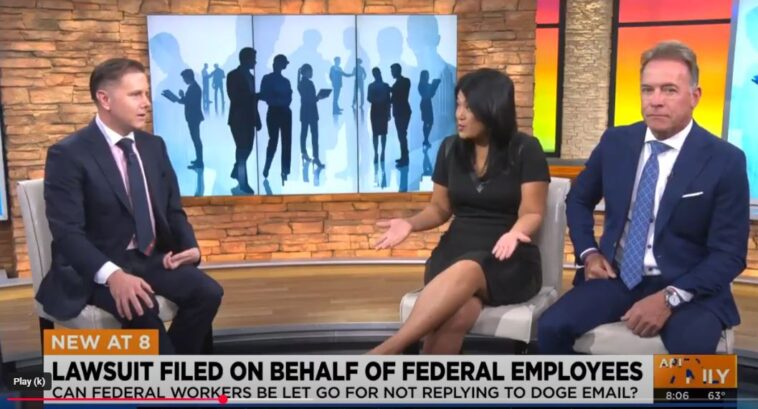
Although many people have heard the term “executive order,” few really understand the tangled issues that underlie the directive. By setting policies without delay, presidents can guide federal agencies, but doing so also opens up debates over authority, employee protections, and the overall impact on our legal framework. In recent discussions, notable defense attorney Josh Kolsrud has offered key insights into these issues, prompting a needed reflection on how executive orders continue to shape, and sometimes challenge, our federal system.
Executive Order Due Process Analysis
At its core, an executive order is not a law in the traditional sense. Instead, it is a directive from the president meant to influence the way federal agencies operate. This method of public management is both powerful and, at times, intimidating for those trying to get around its often intricate demands.
Executive orders allow a president to:
- Implement new initiatives quickly
- Reposition priorities within various departments
- Clarify policies or existing laws without going through lengthy legislative debates
Despite their potential for swift change, these directives work only within the established legal framework. That means they must be consistent with both statutory law and the Constitution, ensuring they do not overstep boundaries that protect citizens and federal employees alike. In many ways, the debate over executive orders is a debate over the right balance between rapid policy action and the slow, careful twists and turns of legal procedure.
Presidential Directives Versus Federal Agency Authority
An important discussion point revolves around the relationship between presidential directives and the final authority held by federal agency leaders. While a president’s executive order can set the stage for policy changes, the ultimate decision-making power rests with agency heads like those at the FBI or the Department of Health and Human Services.
Attorney Josh Kolsrud’s recent analysis sheds light on this dynamic. According to him, even if a directive appears to be coming directly from a well-known figure or personality, it is the designated government officials who have the super important responsibility to decide on implementation. This means that while executive orders drive change, the detailed enforcement falls to individuals charged with respecting legal limits and managing the little details of due process.
This system is designed to ensure that government employees are not forced into compliance without the protection of existing legal safeguards. The role of agency leaders is to temper the force of presidential power with the responsibility to protect their staff and ensure that directives are in line with the overall statutory and constitutional framework.
Federal Employee Protections Under the Pendleton Act: Hidden Complexities Explored
One of the key factors that shapes employee rights in the context of executive orders is the landmark Pendleton Act of 1883. This super important piece of legislation established a merit-based system for federal employment, ensuring that workers have clear, albeit sometimes complicated, legal protections.
Before the Pendleton Act, dismissals and appointments could be highly arbitrary, leaving employees vulnerable in an unpredictable environment. Today, federal employees enjoy due process rights that protect them from abrupt terminations unless proper procedures are followed. This means that even when an agency head directs immediate action in response to a new executive order, there are safeguards built into the system to prevent undue loss of livelihood.
Some key aspects of these protections include:
- A requirement for careful due process reviews in termination cases
- Historical precedents, such as the 1981 air traffic controllers’ dispute under President Reagan, which reaffirmed the importance of procedural fairness
- Robust legal frameworks that continue to shape how directives are implemented
These measures help to ensure that executive orders remain a tool for governance and not an instrument of unchecked power. They provide peace of mind to federal employees, assuring them that even in the midst of sweeping policy shifts, their rights are not trampled without a fair review.
Key Distinctions Between Authority and Delegation
A central piece of understanding executive orders lies in grasping the subtle parts of how authority and delegation function. The confusion over who holds the final say in the actions outlined by an executive order is not uncommon. Media headlines can often muddy the water, leading the public to believe that high-profile figures have more direct role than they actually do.
In reality, the final authority typically rests with agency leaders who must decide whether to enforce such directives. This distinction is critical because it prevents a scenario where presidential promises or statements morph into immediate, unchallengeable orders affecting every federal employee.
This differentiation ensures that even if a directive is inspired by a high-ranking official or an influential public figure, it must always align with established lines of authority within federal departments. Here is a table summarizing the differences:
| Aspect | Executive Order | Agency Leadership |
|---|---|---|
| Origin | Issued by the President | Resides with agency heads |
| Implementation | Sets immediate policy direction | Carries out enforcement and adaptation |
| Legal Constraints | Must fit within constitutional and statutory limits | Ensures that employee rights and due process are upheld |
This clear demarcation between directive and delegation provides comfort in knowing that even in the wake of rapid presidential action, there are multiple layers of review and authority.
Reviewing the Fine Points of Executive Authority and Due Process
The conversation around executive orders often turns to legal challenges and the broader future of such mandates. Whenever a new directive is issued, questions emerge about its legitimacy, especially if it appears to bypass standard processes. A closer look reveals that federal employees and the agencies they serve are well-protected by longstanding legal principles.
Attorney Josh Kolsrud has recently highlighted that the potential for lawsuits exists if due process is not properly respected. However, he is also quick to point out that unless federal employees face termination without the entire due process procedure, dramatic legal shifts are unlikely. Courts are more likely to look at whether established steps have been followed rather than punishing the use of executive orders as a general practice.
This approach reinforces a key promise of our judicial system: that even powerful executive actions will always be moderated by the requirements of fairness and legal adherence. By ensuring that every step is grounded in law, the system protects individual rights even while enabling fast-moving administrative changes.
Presidential Directives and the Role of High-Profile Figures in Shaping Public Perception
In today’s media-saturated environment, executive orders can sometimes be misunderstood, partly due to the way they’re presented by public figures. It’s not uncommon for an email or public statement by a high-profile individual to be misinterpreted as a formal government order. Yet, it is crucial to understand that the real weight of any executive directive lies with those charged with enforcing it.
The influence of celebrities or business moguls in these scenarios can add an extra layer of confusion. Despite any attention they receive, it is the agency leader’s responsibility to ensure that any action stemming from such directives is backed by proper legal authority. In effect, while opinions from well-known figures might stir public debate, they do not replace the authority of legally established procedures.
This separation between political rhetoric and administrative action serves as a check, ensuring that executive orders do not devolve into vehicles for unbridled personal influence. Instead, every order is filtered through a system designed to protect both the rights of federal employees and the integrity of our legal process.
Assessing Legal Challenges to Executive Orders: Courts and Controversies
Whenever a contentious executive order is issued, it is only a matter of time before the courts are asked to review it. Legal challenges typically arise when there is a perceived mismatch between the directive and established legal procedures—in other words, when the order seems loaded with problems or ignores settled law.
Recent challenges have focused on whether federal employees are being forced to comply with directives without the opportunity to engage in due process. These cases raise questions about procedural fairness, highlighting the fine shades between proper administrative function and overreach.
In such situations, courts play a key role in ensuring that executive orders are in line with both constitutional and statutory mandates. They examine:
- Whether the steps taken by the president and agency heads were legally sound
- If proper due process procedures were followed
- How the historical context of employment protection, rooted in the Pendleton Act, influences current practices
By scrutinizing these factors, the judiciary reinforces the principle that while presidents may need to act swiftly, they cannot sidestep the legal limits that protect both government employees and the broader public. The ongoing legal debates help remind us that every executive order is subject to a system of checks and balances, designed to handle even the most nerve-racking administrative moves.
Analyzing the President’s Role in Administering Swift Policy Changes
One of the enduring appeals of executive orders is their potential for rapid implementation. In times of national emergency or pressing policy needs, the ability to set direction immediately is immensely valuable. However, this immediacy comes with its share of tricky parts.
The president’s power to issue directives is balanced by the need to maintain a coherent structure within federal agencies. This is where the concept of due process and the need for administrative agency oversight become super important. Every directive must be carefully aligned with existing laws, ensuring that while change might be rapid, it is never chaotic.
Key points in this balancing act include:
- The need for clear delegation of authority, making sure that agency heads fully understand and control the implementation
- A robust system of checks to ensure that employee rights are not trampled
- Constant vigilance by the judiciary to ensure that no executive action falls into the realm of unconstitutional overreach
This balance is critical not only for running efficient government operations, but also for maintaining public trust. When the system works correctly—combining the benefits of swift action with proven legal safeguards—the American public can be confident that no single branch of government has free rein over the law.
Federal Agency Roles in Implementing and Enforcing Executive Orders
Another often-overlooked aspect of executive orders is the critical role played by federal agencies in their implementation. While the president sets the overall direction, it is the federal agencies that carry out the heavy lifting of bringing these policies to life.
Agencies must interpret executive orders within the framework established by Congress and the Constitution. This requires them to make nuanced decisions on how best to align the order’s objectives with existing laws and established protocols. In many cases, agency heads are tasked with finding a middle ground where the swift action mandated by the order does not compromise the legal rights of employees or disrupt established practices.
The following bullet list summarizes the responsibilities of federal agencies:
- Interpreting the executive order in context of existing laws
- Ensuring that implementation procedures respect employee protections
- Reviewing new policies through a legal lens before enactment
- Communicating clearly with employees to avoid confusion around compliance
By effectively managing these tasks, agencies serve as a critical buffer between the president’s directives and the day-to-day actions of government workers. This not only protects employees but also ensures that the public sees a consistent, lawful approach to policy change.
Lessons from Historical Precedents: The 1981 Air Traffic Controllers’ Case
History is replete with examples where executive orders have sparked contentious debates over due process. One notable case involves the 1981 dispute with air traffic controllers under President Ronald Reagan. This example remains a key part of the conversation, illustrating the need for comprehensive safeguards when enforcing major policy changes.
What makes this historical incident so significant? Essentially, it underscores the importance of due process in administrative actions. Federal employees, especially those with less job security, must have clear channels for redress if new policies threaten their livelihoods. The system of checks that was reinforced in the aftermath of that case continues to serve as a reminder: swift executive action must never come at the expense of fundamental legal protections.
This case is instructive for our current era, as debates over executive orders continue to surface. The little details—from the exact wording of a directive to the manner in which it is implemented—can have enormous implications. The 1981 case teaches us that extensive legal review is not a bureaucratic nuisance but a necessary process to balance the need for immediacy against the imperatives of fairness and accountability.
Modern Implications: Presidential Powers in the 21st Century
As we move further into the 21st century, the role of executive orders remains as significant as ever. In an age of rapid change and constant media attention, the president’s ability to issue directives is both a powerful policy tool and a potential flashpoint for controversy.
The legal system continues to adapt to new challenges, ensuring that every executive order is closely examined for potential overreach. With advances in technology and the intense scrutiny of social media, the public is more informed than ever about the little twists and turns of government action.
Some modern considerations include:
- The role of social media in shaping public perceptions of executive orders
- The increased likelihood of legal challenges due to heightened public awareness
- How rapidly changing societal needs force the government to find a balance between speed and legal accuracy
While presidents may claim that swift action is necessary in times of crisis, the enduring reality is that every executive directive must be measured against the established framework of law. This approach ensures that no matter how urgent the need, the process does not sacrifice the due process rights of federal employees or the constitutional safeguards designed to protect all citizens.
How Legal Challenges Shape the Future of Executive Orders
Legal challenges to executive orders ensure that these presidential directives do not become vehicles of unchecked power. When courts are called upon to sort out disputes regarding enforcement, they focus on whether due process was respected and if the proper procedures were followed. In many ways, these legal reviews serve as an ongoing commentary on the balance of power in our federal system.
Critics often argue that executive orders can be overwhelming and off-putting, particularly when they appear to bypass thorough legislative debate. However, supporters counter that in moments of national need, the ability to take decisive action is critical. The truth is likely found somewhere in between: the president must be able to act quickly, but such action must always be managed through established legal checks.
Key factors in these challenges include:
- Review of whether agency heads properly interpreted and implemented the directive
- Assessment of whether federal employees were given their full due process rights
- Scrutiny over whether the executive order stands on firm constitutional ground
The outcome of these legal processes sets important precedents for future administrations, underscoring that even in the fast-paced realm of executive action, there is no substitute for careful, methodical legal review.
Finding Your Path Through Today’s Legal and Political Landscape
For many citizens, understanding the workings of executive orders is like trying to figure a path through a maze filled with confusing bits and tangled issues. Yet, it is precisely by examining these issues—in their fine points and in their more obvious twists—that we can appreciate the balance between swift action and legal safeguards.
The debate over executive orders is not just academic; it affects the real-world functioning of government and the protection of individual rights. Whether you are a federal employee, a legal professional, or simply a concerned citizen, a clear understanding of how executive directives work is essential for informed discourse.
In a society where decisions are made rapidly and where public opinion can shape policy in an instant, having a grasp of the legal processes behind executive action can empower you as a citizen. It reminds you that even when policies change overnight, there is a network of legal protections designed to ensure fairness and accountability.
Working Through the Challenges of Executive Order Implementation
As the political environment continues to evolve, the legal framework surrounding executive orders must also adapt. Working through this process means acknowledging that while the president’s power is significant, it is not without its limits. The legal system, through decades of precedent—from the Pendleton Act to recent judicial reviews—has ensured that executive actions are checked by a commitment to due process.
For federal employees, this means that a directive, even one that comes with the urgency of a national emergency, will always be scrutinized to confirm that it respects their rights. For the public, it means that executive orders, as dramatic as they might sometimes appear, are subject to rigorous, if sometimes nerve-racking, legal review before they can fundamentally alter the landscape of government operations.
It is this constant interplay between speed and caution, between swift executive action and measured legal frameworks, that defines our federal system. And while the rapid pace of modern politics might sometimes make it seem like policies are dictated without room for debate, the truth is that a robust network of checks and balances always remains in place.
Considerations for Future Presidential Directives
Looking forward, future presidential directives will continue to evolve alongside our understanding of law and civil rights. As new challenges emerge—from digital security issues to evolving public policy needs—the tools used to issue and enforce executive orders will also have to adapt.
Some considerations for the future include:
- Enhanced transparency in how executive orders are formulated and implemented
- Increased input from legal experts and federal agencies prior to issuing major directives
- Improved avenues for public comment and judicial review to safeguard against potential overreach
These adjustments will help maintain a balance where the president can take necessary action without compromising the foundational legal rights that protect our democracy. As policy continues to shift to address 21st-century concerns, ensuring that executive orders remain both lawful and effective is a challenge that lawmakers, judicial bodies, and administrative agencies must all work together to meet.
Comparing Past and Present: An Evolving Legal Landscape
As with many areas of public policy, the history of executive orders provides a roadmap for understanding current practices. Comparing past events, such as the air traffic controllers’ dispute, to present actions reveals both continuity and change in the legal landscape. While the basic principles of due process and agency oversight remain unchanged, the methods of implementation and public scrutiny have evolved dramatically.
For example, the media landscape of today—with its rapid news cycles and real-time social media updates—can amplify both the impact and criticism of executive orders. In the past, slower communication meant that controversies could simmer and be addressed more methodically. Today, however, every new presidential directive is examined in real time, prompting immediate legal, political, and public responses.
This evolution highlights the need for adaptive legal frameworks that can manage the fast pace of modern policy-making while retaining the slow, careful reviews that protect rights. It is a dynamic tension: one that demands both rapid executive action and a commitment to long-standing legal protections.
Final Thoughts: A Measured Look at Executive Orders and Their Limits
In wrapping up this discussion, it is clear that executive orders remain one of the most powerful tools available to a president. They enable quick policy shifts and serve as a direct method of influencing government operations. However, as we have seen, this power comes with its share of tricky parts, tangled issues, and complicated pieces that demand careful legal consideration.
The contributions of legal experts like Josh Kolsrud remind us that even the most rapid administrative actions are subject to the enduring principles of due process and legal accountability. For federal employees, this means that their rights are protected even in the face of swift policy changes. For the public, it reinforces the idea that our government is a system of checks and balances where no single branch holds absolute power.
By examining the fine points of executive authority, thanks to historical precedents, modern legal challenges, and thoughtful analysis, we find that the balance between swift action and cautious procedure is not only necessary but also integral to maintaining a just society. As debates continue over the legitimacy and execution of executive orders, this measured perspective serves as a reminder that every directive—no matter how immediate it may seem—is firmly rooted in a tradition of legal review and accountability.
Ultimately, understanding the legal landscape of executive orders is essential for both policymakers and the public. It is a lesson in how to steer through the maze of rapid political action without sacrificing the core principles that have long guided our nation: transparency, fairness, and the protection of individual rights.
In a world where governmental actions are increasingly scrutinized and debated, taking the time to appreciate the balance between executive direction and procedural safeguards is more than just an academic exercise—it is a necessary step in ensuring that our government remains both effective and just.
Read more about this topic at https://kolsrudlawoffices.com/josh-kolsrud-3tv-news-latest-presidents-executiv-orders/
Related articles you might like
What Is an Executive Order and How Does it Work?
Trump 2.0: Executive Orders, Explained (So Far)