
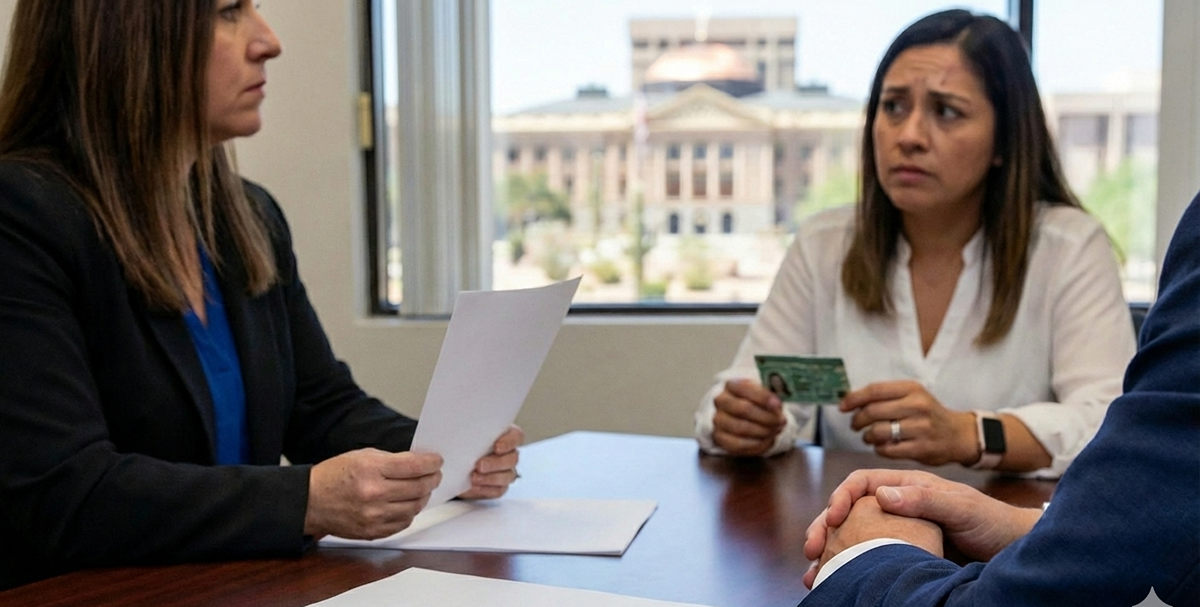
Family Law, Immigration, and Divorce: A Delicate Balancing Act
Divorce is often a nerve-racking process on its own, and when combined with immigration concerns, it can feel overwhelmingly tangled and off-putting. For many immigrants who received a green card through marriage, the prospect of a divorce raises several tricky parts and confusing bits. In Arizona, where divorce is handled by state courts while immigration issues fall under federal jurisdiction, it becomes essential to figure a path that keeps both processes from interfering with each other.
In this opinion editorial, we’ll take a closer look at the fine points of how divorce can affect your immigration status in Arizona. We will discuss the key timing issues, the subtle details distinguishing conditional from permanent green cards, and practical tips for keeping your federal immigration benefits intact while sorting out your family law matters.
Understanding Arizona Divorce Law and Immigration Concerns
Arizona divorce law is designed to address the family side of the matter, dealing with areas such as property division, child custody, and support orders. However, when you obtained your green card through marriage, your immigration history might later be reviewed by federal agencies like USCIS—a process that can dig into the shared finances and residential details of your relationship.
The state court determines issues like child custody and asset distribution, while federal agencies are focused on whether your marriage was genuine or simply a means to secure immigration benefits. Although these processes run on parallel tracks, their subtle connection creates tricky parts that require careful attention, especially if your green card came with conditions.
Arizona Divorce Law Basics: Residency and Timing Requirements
For a divorce to proceed in Arizona, at least one party must meet the residency requirement as defined by A.R.S. § 25-312. This means one of the spouses must have been domiciled in Arizona—or stationed here in the military—for a minimum of 90 days before filing. This is a key point for immigrants who may have relocated recently because timing is not just a state requirement; it also influences the federal immigration deadlines.
Filing too early might lead to delays or even a dismissal, forcing you to refile later—a twist that is both intimidating and potentially problematic when it comes to meeting your immigration deadlines. The state’s no-fault divorce system makes it relatively straightforward to conclude that a marriage is irretrievably broken without a need to prove wrongdoing. However, even the smallest details and subtle pieces of evidence can later be scrutinized during an immigration review.
How Federal and State Jurisdictions Intersect
One of the most confusing bits about divorce and immigration in Arizona is the clear separation between state and federal courts. Arizona family courts only make decisions about state matters—such as property division or child support—and do not affect your green card status directly. On the other hand, federal agencies like USCIS assess all the detailed evidence that might include your divorce filings.
This duality means that while your divorce decree might appear to be any other state order, the fine shades of language in your submissions may be revisited by federal officials. This overlap, though subtle, is critical. Because USCIS could look at timing, shared living arrangements, and even the tone of your divorce filings to decide whether the original marriage was genuine. It becomes super important to maintain consistency and factual clarity to protect both your state and federal legal interests.
Conditional Versus Permanent Green Card Status: The Complicated Pieces
A large number of immigrants who get their green cards through marriage receive a conditional status if the marriage was less than two years old at the time approval was granted. This conditional status comes with its own set of rules, including the necessity to jointly file Form I-751 to remove conditions. When a divorce is in the mix, filing jointly is no longer an option without additional steps.
Dealing with Conditional Green Cards and Divorce
Divorce can introduce some tangled issues if you hold a conditional green card. Generally, the couple must file Form I-751 together within a specified period, but if the marriage dissolves before the conditions are removed, the alien spouse has to file for a waiver. This waiver allows the condition removal process to proceed without the cooperation of the now-divorced spouse.
USCIS provides several waiver options. In many cases, if the marriage was entered in good faith and the relationship unravelled for reasons beyond control, the immigrant can still file a waiver. During this process, you may be required to provide a breadth of evidence, including shared leases, bank statements, insurance policies, photos, and affidavits from people who witnessed your life together. These documents help prove that your relationship was genuine, despite its eventual untimely end.
Table 1 below outlines the necessary documentation typically required in these scenarios:
| Documentation | Description |
|---|---|
| Leases and Rent Receipts | Proof of shared living arrangements |
| Joint Bank Statements | Evidence of shared finances |
| Insurance Policies | Documents that show mutual benefit designations |
| Photographs | Visual records of the marriage over time |
| Affidavits | Third-party testimonies confirming a bona fide relationship |
These documents can help demonstrate the fine details of your marital life when applying for a waiver. Although assembling this evidence may seem overwhelming at first, being methodical and cooperative with your immigration attorney can make the process less nerve-racking.
Permanent Green Card Holders After Divorce: What Changes?
If you are a permanent resident without any conditions on your green card, a divorce does not automatically revoke your status. However, divorce still leaves a mark on your immigration history. USCIS may review the details of your previous marriage when you apply for naturalization, and your divorce decree could be scrutinized as part of that process.
For permanent green card holders, the divorce itself is rarely the cause of lost status; rather, it is the potential inconsistency or misleading evidence that could trigger further review. It is crucial to ensure that your divorce filings are accurate, complete, and do not include language that might suggest that the marriage was solely for immigration benefits.
Impact of Divorce on Citizenship Through Marriage
Many believe that once you obtain your green card, the path to citizenship is automatically paved. However, the reality is a bit more complicated, particularly for those whose citizenship applications rely on marriage to a U.S. citizen.
Understanding the Timelines and Requirements for Naturalization
For spouses of U.S. citizens, a common option to naturalize is to apply after three years as lawful permanent residents—provided the marriage has remained intact during that time. If a divorce occurs before you file under this expedited three-year rule, you generally must wait five years to be eligible for naturalization.
This shift in timelines is one of the small yet critical twists that can significantly delay your progression toward citizenship. In effect, while divorce does not eliminate your chance to naturalize, it alters the process by which you can meet the eligibility criteria.
Moreover, any divorce proceedings may invite additional scrutiny from immigration officials during your citizenship review. They might request further documentation or clarification on your marital history. This is why it’s essential to gear your divorce filings so they accurately represent the genuine nature of your past relationship.
Documenting the Marriage: Why Accuracy Is Super Important
Maintaining honesty and accuracy in your divorce records is super important for several reasons. Not only do these documents serve as the official record in your state court case, but they can also be called upon later during your naturalization process. Any deviation or inaccuracy might lead to questions about the legitimacy of your marriage, potentially complicating your federal application.
Consider the following bullet list of best practices when documenting your divorce:
- Be truthful and precise in all your court filings.
- Avoid using hyperbolic or misleading language that might be misinterpreted during an immigration review.
- Collect and preserve all documents that highlight shared responsibilities and cohabitation.
- Coordinate closely with both your divorce attorney and your immigration attorney to ensure consistency.
- Keep a detailed timeline of events that led to the dissolution of the marriage.
This proactive approach ensures that you have a coherent record that stands up to scrutiny from both state and federal authorities.
Real-World Implications: Case Studies and Practical Examples
To get into the real-life impact of divorce on your immigration status, it helps to look at practical examples. Consider a couple in Phoenix where one spouse is a conditional green card holder and the other a U.S. citizen. When the marriage falls apart and a divorce is initiated, the conditional resident is suddenly facing federal deadlines to remove conditions—a deadline that could be jeopardized by the divorce proceedings.
In another example from Chandler and Gilbert, a divorce was impending while the conditional card was nearing its expiration. The immigrant spouse feared losing their green card because the U.S. citizen spouse was uncooperative in filing the necessary forms. These examples underscore the fact that while divorce in Arizona is managed by state courts, its effects on immigration matters are real and potentially intimidating.
Bulleted key takeaways from these scenarios include:
- Timing is critical when facing divorce and needing to file for a waiver on a conditional green card.
- Documentation that supports the genuineness of the marriage can be a lifesaver in stressful situations.
- Close coordination between family law attorneys and immigration lawyers can prevent adverse outcomes.
- Even for permanent residents, maintaining accurate and consistent divorce records is essential for future citizenship applications.
These real-life cases remind us that while divorce may be a personal and emotional matter, the legal repercussions—especially for immigrant spouses—can introduce a series of additional, nerve-wracking steps.
Practical Steps to Protect Your Immigration Status During Divorce Proceedings
One of the most important ways to manage your way through the legal maze of divorce and immigration is to get organized and proactive about collecting evidence. Document every detail of your shared life, from household bills to photos and affidavits from family and friends who witnessed your relationship. This evidence becomes particularly important if you have to file for a waiver on a conditional green card.
Gathering Proof of a Genuine Marriage
From the start, it is a good idea to keep comprehensive records that can establish the real nature of your marriage. This might include:
- Joint lease agreements or mortgage statements
- Bank account statements showing shared finances
- Insurance policies and beneficiary designations
- Tax returns filed jointly
- Photos from family gatherings and vacations
- Correspondence that reflects shared responsibilities
These documents serve as evidence that your marriage was not simply a tool for obtaining immigration benefits. They also help protect your legal status if federal agencies later review your case.
Maintaining Consistency in Court Filings
It is equally important to ensure that your divorce filings are straightforward and consistent. Avoid using exaggerated or ambiguous language that could be revisited unfavorably in your immigration review. Accurate and detailed records build a clear timeline—a timeline that strengthens both your family law case and your immigration file.
The following table offers a checklist for what to verify in your divorce documents:
| Aspect | Best Practices |
|---|---|
| Timeline Accuracy | Ensure dates and events match across all legal documents. |
| Language Clarity | Use precise language that reflects facts without exaggeration. |
| Detail Consistency | Include specifics on shared finances, cohabitation, and joint responsibilities. |
| Supporting Evidence | Attach copies of leases, bank statements, and other pertinent documents. |
Following this checklist can help preserve both your state and federal legal positions while reducing the nerve-wracking potential of additional investigations.
Coordinating with Legal Experts: Family Law and Immigration Attorneys Working Together
The legal system can be full of problems and loaded with tension when multiple branches of law intersect. One of the most useful strategies is to assemble a coordinated team of legal experts who specialize in both family law and immigration. This is critically important as you deal with the juxtaposition of state and federal requirements.
Building a Coordinated Legal Team
When you start the divorce process, consider hiring:
- An experienced family law attorney knowledgeable in Arizona divorce proceedings
- An immigration attorney who understands the specific requirements for green card adjustments and naturalization
The benefit of this coordinated approach is that your legal filings can be aligned, so that your state documents do not inadvertently complicate your federal immigration case. Working with these professionals provides clarity on:
- How to time the filing of waiver applications for conditional green cards
- What documentation to gather for immigration purposes
- How to ensure that statements made in family court are consistent with federal records
Together, the legal team can prepare a strategy that minimizes the risk of losing immigration status during divorce proceedings. Their combined experience can help you work through every twist and turn of this process.
Consultation and Communication: Keys to Success
Open communication between your attorneys and yourself is super important. Frequent consultations ensure that both your divorce strategy and immigration plans remain in sync. Your attorneys can help you anticipate any potential pitfalls, whether it’s a misaligned timeline or ambiguous language in your filings.
By taking the time to dig into every detail and keeping all records updated, you reduce the chance that the federal review of your immigration case will be thrown off by unexpected inconsistencies. This coordinated effort can be the difference between a smooth transition and a nerve-racking, drawn-out legal struggle.
Protecting Your Legal Status: Tips and Strategies
While each divorce case comes with its set of challenging bits and tangled issues, there are several practical strategies immigrants can adopt to safeguard their legal rights. These strategies center on maintaining thorough documentation, accurately representing your relationship in legal filings, and staying informed about both state and federal timelines.
Stay Organized and Proactive
Keeping track of every document related to your marriage and subsequent separation is a must-have habit. Create a dedicated file—both physical and digital—where you store:
- Financial statements and bank records
- Housing contracts and utility bills
- Photographs and personal correspondence
- Legal documents from both your family court and immigration cases
This level of organization not only makes it easier for your attorneys to build a robust case but also strengthens your defense if any questions arise from USCIS or during the naturalization process.
Keep Informed About Federal Deadlines and Requirements
Federal immigration rules, including those governing conditional green cards and naturalization, come with a tight schedule. Missing a deadline can lead to delays or potentially jeopardize your legal status. To avoid surprises:
- Stay updated with USCIS announcements and policy changes
- Schedule regular consultations with your immigration attorney
- Mark all critical dates and deadlines on your calendar
The proactive approach not only mitigates the risk of missed deadlines but also reduces the stress associated with managing these overlapping legal timelines.
Use Clear, Consistent Language in Documentation
The language used in your divorce filings and related documents can have significant repercussions. It is essential to use clear, factual language that accurately describes your situation without embellishment. Avoid using exaggerated terms that might be misinterpreted during federal reviews. Instead:
- Stick to precise facts and verifiable details
- Focus on enumerating the timeline of events
- Provide concrete examples and supporting evidence
- Avoid subjective opinions that could raise questions about bias
This approach helps ensure that your documents reflect the reality of your marriage and subsequent divorce in a way that stands up to close examination.
Overcoming the Emotional Toll and Legal Stress
The process of divorce combined with immigration hurdles is not just a legal challenge—it is also a deeply personal and emotional journey. The nerve-racking aspects of dealing with both state and federal legal systems can take a toll on anyone, especially when your future residency and citizenship are at stake.
It is important to remember that while legal battles may be full of problems and loaded with tension, finding supportive legal guidance and emotional support can make your path easier. Consider joining support groups for immigrants undergoing divorce or seeking legal counseling that addresses both family matters and immigration issues.
Building a network of peers, friends, and advisers who have faced similar challenges can help you manage the stress and provide practical insights into making your way through this complex process.
Final Thoughts: Ensuring a Stable Future Amid Divorce and Immigration Challenges
Divorce is never an easy process on its own, and when intertwined with immigration issues, the process brings about several complicated pieces and nerve-wracking twists. However, by carefully documenting your marriage, staying organized, and coordinating with both family law and immigration attorneys, it is possible to protect your legal status throughout the proceedings.
Arizona’s divorce process is designed to handle family matters with sensitivity and order, but the burden of proving the genuineness of a marriage falls on you when federal immigration authorities take a closer look. While the paperwork, deadlines, and evidentiary requirements may seem intimidating, a well-planned strategy and open communication with your legal team can help you steer through these challenges successfully.
By understanding the key differences between conditional and permanent green card status, following best practices in documenting your marriage, and staying aware of both state and federal timelines, you can mitigate the risk of jeopardizing your future in the United States. Remember, the goal is not only to achieve a fair divorce outcome but also to ensure that the legal steps you take today do not cast a shadow over your tomorrow.
Summary of Key Points
Below is a concise summary to help you review the main ideas discussed:
- Arizona divorce law focuses on state issues like property division and child custody, while federal agencies manage immigration matters.
- Timing is critical—both for meeting residency requirements and for filing immigration paperwork such as the I-751 waiver for conditional green card holders.
- Accuracy and consistency in your divorce filings are essential in protecting your future immigration and naturalization prospects.
- Coordination between family law attorneys and immigration lawyers can smooth out the nerve-wracking process of handling both divorce and immigration challenges.
- Staying organized, documenting every detail, and understanding federal deadlines are practical steps you can take to protect your legal status.
In a legal landscape that can often feel tangled and intimidating, the small distinctions in language, timing, and evidence can have large implications. It is super important to take your time, gather all necessary documentation, and work closely with professionals who understand both the state and federal sides of your case.
A Call to Action: Seek Expert Guidance
If you find yourself at the intersection of divorce and immigration concerns, remember that you do not have to navigate these confusing bits alone. Contact a legal team that has the experience and dedication required to work through both family law and immigration matters. With the right support, you can focus on rebuilding your life while ensuring that your legal status remains secure.
A free consultation with a qualified attorney can provide you with insights tailored to your case, helping you take the wheel and steer through the maze of legal processes with confidence. Reach out today and ensure that your future isn’t compromised by avoidable complications.
Conclusion: Charting a Course for a Stable Future
Divorce and immigration challenges may be full of problems and loaded with intricate twists, yet with careful planning and a coordinated legal approach, they can be managed effectively. By focusing on practical steps, gathering and organizing evidence, and ensuring that all filings reflect the true nature of your marriage and divorce, you lay the groundwork for a stable future.
Remember that while the dual processes of state divorce proceedings and federal immigration reviews might seem intimidating at first, a transparent, organized, and honest approach can help you secure a positive outcome. It’s all about finding your path, managing your way through the legal maze, and ultimately protecting your right to remain and build a life in the United States.
Your journey through divorce and immigration may be nerve-racking, but it also paves the way for a brighter chapter ahead. With the right legal support and a proactive attitude, you can ensure that both your personal and legal foundations remain strong, no matter what challenges lie ahead.
Read more about this topic at https://azcriminalandfamilylaw.com/green-card-status-after-divorce/
Related articles you might like
How Will Divorce or Separation Affect My Immigration Status?
How Divorce And Separation Can Affect Your Immigration …